
How to Create and Sell Notion Templates That Actually Make Money (2026 Masterclass)

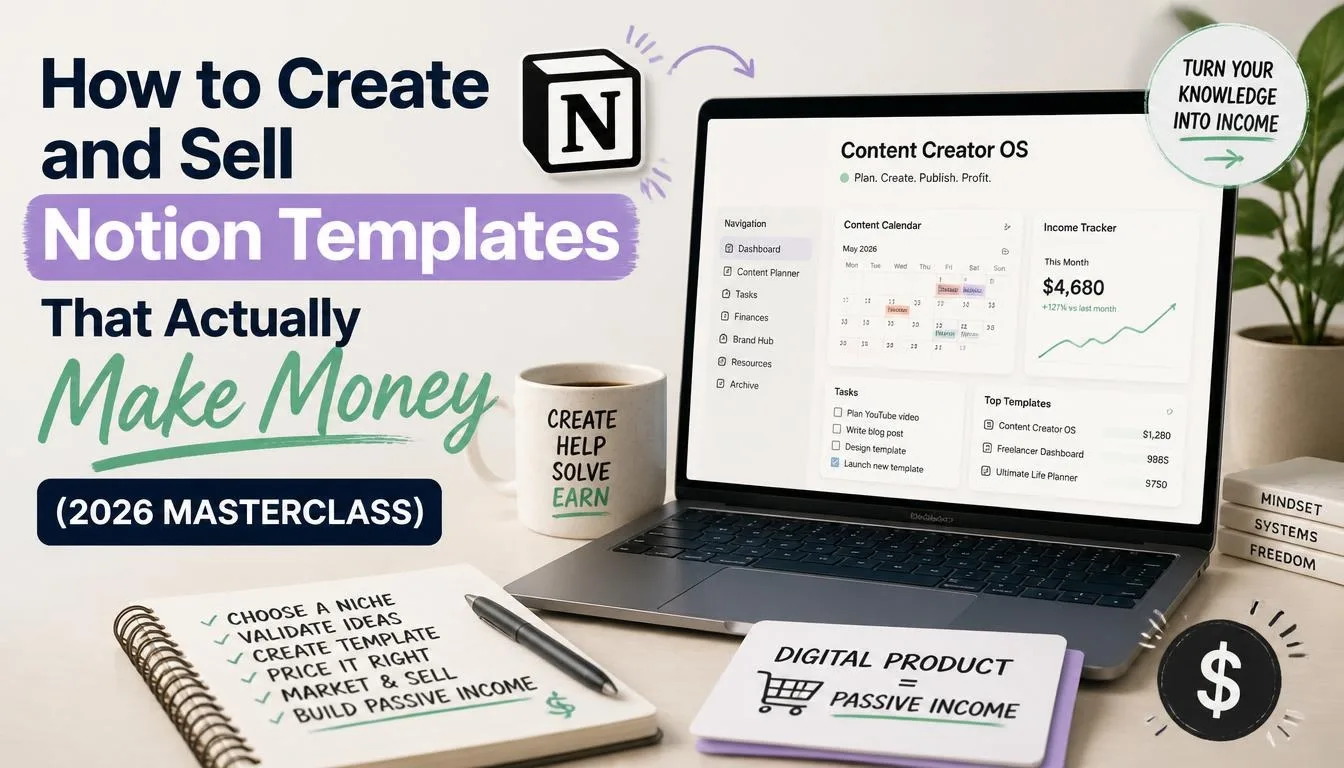
Let's clear the air immediately: the gold rush of throwing together a basic habit tracker, listing it on Gumroad, and making five figures overnight is over. The Notion marketplace is mature. Buyers are sophisticated, saturated with low-effort layouts, and unwilling to pay for digital clutter. If you want to build a profitable, sustainable Notion template business in 2026, you cannot rely on aesthetics alone. You need to build software-grade digital products wrapped in aesthetic design.
Over the last four years, I’ve audited hundreds of template creators, analyzed top-earning stores on Lemon Squeezy and Gumroad, and launched products that generated over six figures in passive revenue. The mechanics of selling Notion templates have shifted from simple page design to sophisticated systems architecture. Here is the exact playbook to engineer, market, and scale a Notion template empire that stands out in a crowded market.
Phase 1: Engineering High-Value Notion SystemsMost creators build Notion templates backward. They pick a pretty cover image, choose a pastel color palette, and start typing databases. This results in templates that look stunning in screenshots but break the moment a user tries to input real data. High-value templates solve specific, painful business or personal operational bottlenecks.
Solving a Burning Problem vs. Nice-to-Have DashboardsBuyers don't pay $49 for a "Life Planner." They pay $49 for a system that cuts their weekly administrative overhead in half, organizes their freelance client pipeline, or manages a multi-channel content engine. When conceptualizing your template, ask yourself:
- What repetitive operational friction does this eliminate? (e.g., manual content repurposing, client onboarding bottlenecks).
- How many hours does this save the user weekly? If your template saves someone 3 hours a week at a $30/hour value, your $50 template pays for itself in under two weeks.
- Does it require complex onboarding? If the user needs a 45-minute video to understand your database relations, your UX is broken.
The core of any professional Notion template isn't the text; it's the database architecture. You must master relational databases, rollups, and formulas (especially the newly updated Notion formula syntax) to build systems that scale.
Use Master Databases: Instead of scattering tasks across ten different pages, build one master task database with multi-select views, filtered dashboards, and dynamic status tags.
Automate via Integrations: Build templates that natively integrate with Make.com or Zapier. A Notion template that automatically pulls in Stripe receipts or Slack alerts commands a 3x higher price point than a static page.
Design for Scalability: Test your templates with at least 500 dummy entries. Do your formulas break? Does the page lag? If your template collapses under data weight, it's not ready for market.
Phase 2: Packaging and User Experience (UX)When a customer purchases your template, the duplicate link is your product, but the onboarding experience is your brand. A poorly structured template leaves users feeling buyer's remorse before they even type their first note.
The Golden Rules of Template UX1. The Control Center Approach: Never dump a user onto a cluttered homepage. Use a dedicated "Home" dashboard with clear callouts, navigation tabs, and a dedicated "Start Here" guide embedded directly into the page.
2. Dummy Content is Mandatory: Empty databases look terrifying to buyers. Populate your template with realistic, industry-specific dummy content. If you're selling a real estate CRM, populate it with mock properties, realistic buyer profiles, and active deal stages. This helps the buyer visualize the end-state immediately.
3. Minimalist Visual Hierarchy: Avoid sensory overload. Use Notion's callout boxes sparingly, stick to a cohesive color palette (monochrome or warm neutrals generally convert highest), and rely on consistent icon systems (such as minimal line icons).
Phase 3: Choosing Your Tech Stack and Distribution ChannelsYou don't need a custom-coded e-commerce store to sell digital products. However, your choice of infrastructure dictates your profit margins, tax compliance overhead, and customer experience.
Platform Comparison for Notion CreatorsGumroad: Great for beginners. High built-in discovery via the Gumroad marketplace, but transaction fees can scale up to 10% + processing fees. Excellent for automated delivery and basic affiliate management.
Lemon Squeezy: The modern gold standard for digital product creators. Acts as a Merchant of Record (MoR), meaning they handle global sales tax and VAT compliance automatically. Highly recommended if you sell internationally.
Productized Storefronts (Framer + Gumroad): For brands looking to scale, building a dedicated landing page on Framer or Webflow and embedding checkout links yields significantly higher conversion rates than a generic marketplace page.
Phase 4: Pricing Strategy and Monetization PsychologyUnderpricing is the silent killer of digital product businesses. Creators often price templates at $9 because they fear rejection. In reality, low pricing signals low quality.
Tiered Pricing ArchitectureTo maximize revenue, structure your product offerings in tiers:
The Essential Tier ($19 - $29): The core template with standard documentation. Appeals to budget-conscious freelancers and hobbyists.
The Pro Tier ($49 - $79): The core template plus advanced automation guides, video walkthroughs, and quarterly updates. This should be your anchor product and primary revenue driver.
The Business / Enterprise Tier ($149 - $299): Fully customized team workspaces, personalized onboarding calls, and dedicated Slack support for small agencies or corporate teams.
Phase 5: High-Converting Marketing PlaybooksBuilding a great template is only 20% of the battle. The remaining 80% is distribution. You cannot rely on launching a product and waiting for organic traffic.
1. Programmatic Content Marketing (SEO)Write hyper-targeted blog posts and guides answering specific pain points your template solves. If you built a Notion client portal for videographers, write comprehensive guides on "How freelance videographers should manage client revisions." Embed your template CTA naturally within the solution.
2. Build in Public on X (Twitter) and LinkedInShare your design process, database formulas, and revenue milestones publicly. Educational threads detailing how you solved a complex Notion formula attract high-intent builders who convert into buyers when the template drops.
3. The Content-Led Video Funnel (YouTube & TikTok)Long-form YouTube walkthroughs are the highest-converting traffic source for digital products. Show, don't just tell. Walk the viewer through a 10-minute real-world workflow using your template, demonstrating exactly how it solves their daily chaos.
The Long-Term Play: Building a Sustainable EcosystemTreat your Notion template business like a software-as-a-service (SaaS) company. Notion updates its platform frequently (adding new AI features, database views, and automations). Your templates require ongoing maintenance, quarterly updates, and active customer feedback loops.
By shifting your focus from aesthetic novelty to rigorous systems engineering, transparent pricing, and relentless audience distribution, you can build a highly profitable digital asset portfolio that generates revenue around the clock.
How to Create and Sell Notion Templates That Actually Make Money (2026 Masterclass)
Learn how to build, price, and market profitable Notion templates in 2026. Turn your digital workspace systems into a scalable online business.